Some Thoughts with ... Pablo Valcárcel Castro
The Author/s
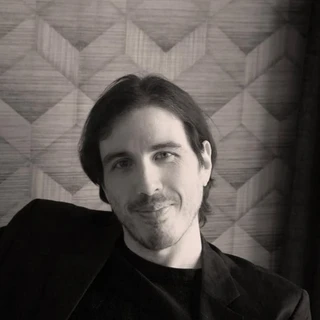
Pablo Valcárcel Castro
Pablo Valcarcel grew up in a bilingual household in the Canary Islands. He studied law but currently teaches entrepreneurship and innovation in Madrid. In 2016 he attended the Odyssey Writing Workshop in New Hampshire. Dream of the Jet-Black City is his first novel.
The Interview
1.- Could you introduce yourself to Jamreads’ readers?
Hi, I’m Pablo, debut author of Dream of the Jet-Black City! I’m a lawyer by training, even though for the past decade or so, I’ve taught entrepreneurship in business schools and worked as an innovation consultant for startups.
I grew up in a bilingual household in the Canary Islands, although it wasn’t until I was a teenager that I started reading more frequently in English. Invariably, each summer I’d visit the UK, go to a bookstore or whatever local roleplaying store I could find (Shoutout to the super cool GW store run in Brighton by a family of metalheads, they were the coolest!) and spend whatever little money I’d scrounged up on roleplaying books and fantasy novels. That haul would last until the next year, and then I’d do it all again. Somehow, as a side effect of this, ‘English’ became the language of fantasy in my head.
2.- When did you start writing with publishing in mind?
Around 2014, I discovered and fell in love with the vibrant short-fiction community in English. I wrote some short stories and even sold some to non-professional markets. I got better and better until I plateaued, and I wasn’t sure why or how to get any better.
In 2016, I applied to a few creative writing workshops and was incredibly fortunate to be accepted by Jeanne Cavelos at the Odyssey Writing Workshop. My application barely arrived in time to be considered, and when the director wrote to tell me I was invited to join them in 2 months, I was over the moon. I could feel I had a life-changing opportunity in front of me. Luckily, I had saved some money the previous year, so I could afford it. From one day to the next, I had to decide whether to quit my job and take a step into the void, or remain where I was in relative safety. I took the plunge. Suffice to say, that decision changed my life.
At Odyssey, I was exposed to fantastic authors like N.K. Jemisin and Mary Robinette Kowal, who taught me a lot not just about the craft but about the profession. For the first time, inspired by my fellow graduates like Rebecca Kuang, Joshua Johnson, Farah Naz Rishi, and Linden Lewis, I decided to try to take on novel writing.
3.- How did the first idea for Dream of the Jet-Black City appear?
In 2002, Wizards of the Coast ran a competition for D&D players to come up with their own fantasy settings. Back then, I had been reading loads of Vertigo comics, and my head was brimming with weird magic systems. I think that’s when the spark of coming up with my own D&D-like campaign setting, but with magics and societies based on different kinds of dreams, emerged. I felt the idea had legs. So much so, in fact, that in the end I decided not to enter the contest and started developing a tabletop roleplaying setting for my own gaming group.
In the following years, I ran many fantasy campaigns set in that world and even attempted to do NaNoWriMo with novels set in the same setting, but never got really far with either.
After the Odyssey workshop, when I was trying my hand at writing longer fiction, I realised this old TTRPG setting was ripe with potential. More importantly, I realised it could be a great vehicle to explore some themes that really interested me: My experiences in learning about and teaching creativity, my dual cultural heritage, and also my fascination with melancholy as a creative fuel in sublime works of art.
4.- Could you tell us a bit more about the process of getting agented in your case?
It was tough! I got a ton of rejections. But somehow, I endured through it all, constantly iterating my pitch and sending it out in batches. One of the hardest things was seeing that the manuscript was ‘fine’ (i.e., nothing was evidently wrong with it), and yet most agents didn’t have a vision for how to sell it.
Luckily, I landed one of my dream agents. From the very beginning, Julie Crisp had been really high on my list (I’m a John Gwynne fan), and her blog posts discussing her editorial approach and way of thinking only made me more interested.
Back then, I was very lucky because Julie was offering (paid) consultations through Jericho Writers. I got one of those slots because I thought she could offer me great feedback, and she ended up liking the manuscript enough to request a full.
5.- Did it change much this book from its inception to the final form we are currently reading?
Before Julie Crisp offered representation, I did a full rewrite for her that took several months. That’s the version that got me agented, but Julie’s formidable editorial approach meant that the true editing had only just begun.
Her feedback really helped me tighten the plot, removing extraneous characters and plotlines. And yet, somehow, she still steered us true to my original vision and the structural core of the book. The epigraphs and prologue, as well as the way they interact with the main plot, were all her doing.
When Bonnier bought the book, Kelly Smith, my editor, led another round of revisions. This one really tightened pacing and how setting information was delivered effectively (especially in such a world\building-heavy book). She also helped sharpen the plot and some character arcs with her excellent vision for precise emotional beats. Also, very importantly, she offered me a vision for how the book could actually resonate in the current market. It might seem prosaic to consider such things when engaging in a creative pursuit, but the truth is that even at that semi-final stage, the book could still have become many different novels. She helped me find the right one for me and the story.
6.- Is there a particular character that didn’t go as planned? Why?
Most of the characters were fairly well behaved! You might think that Geil, being the temperamental and passionate Nightmare-Hunter she is, would have been unpredictable when writing her, but most of her arc stayed true to my original planning. A secondary storyline was completely cut, but I’m hoping to reuse it in the sequel.
Counter-intuitively, it ended up being Daerna, the priestess of the Motherstorm, who most often strayed off the plotted path. Possibly because she had such an unflinching devotion to justice and such a powerful sense of compassion, she always ended up finding a way to dig herself and her friends into deeper and deeper holes. Of course, that meant she was always a lot of fun to write!
7.- Which pieces of media would you say inspired/influenced Dream of the Jet-Black City?
So many! Some I’ve already mentioned, but before any novel-writing, the setting was a TTRPG setting, in turn very inspired by games like Vampire: the Masquerade, or Unknown Armies (with a dash of Warhammer and Midnight’s grimdark).
Other, more direct inspirations in the literary sense came from Gareth Harahan’s wonderful writing (whether in roleplaying games or fiction), China Miéville’s incredible sense for philosophically and politically ambitious novels, as well as Italo Calvino’s evocative and poetic fantasies.
Music, also being such a huge part of the book, meant I drew a lot of inspiration from musicians I greatly admire, from the gorgeous musical lyricism of Florence + The Machine and Patrick Wolf to the dark edges of alternative rock muse Melissa Auf Der Maur.
The Dishonoured video game series, too, loomed large in my mind with its sombre architecture, fantastic soundtrack, dark magic system and lavish worldbuilding. And no list would be complete without acknowledging the foundational/seminal influence of the Vertigo line of comics in the 90s (the so-called British Invasion of the US comics industry), from Swamp Thing and Doom Patrol to, of course, The Sandman.
8.- In your free time, you also practice LARP. How would you say it has helped with your writing?
There’s a brilliant article on this, written by the amazing Karin Tidbeck, or the equally recommendable Wonderbook by Jeff VanderMeer. It’s important to mention it since Karin’s own thoughts have greatly taught me how to approach larping as a writer.
I think the short of it is that modern European larping offers many opportunities to visit and stay at fascinating locations, which in turn allow you as a writer to experience and document fascinating sensorial details: the smell of the woods at night while hunting monsters in the dark, the way in which you experience the cold in drafty stone castles, etc.
Less obviously, in my own personal experience, larping when setting and characters have been developed with certain detail (E.g. in the wonderful Aretuza Larp by Efimeral or the equally fantastic L’Inconscience by NotOnlyLarp) offers fascinating sandboxes in which to try subplots or experience firsthand a sort of simulation that enables you to explore the emotional ramifications of a storyline from the perspective of a character embedded in that world/story. Writers do this all the time when writing, the interesting difference here being that the simulations are normally running inside your own head. In a larp, if you’re immersing yourself in your character’s head, you don’t just imagine the distress you feel when you see your best friend being poisoned by a venomous dart; you feel that distress, that anxiety in full 4k resolution as you race through the manuscripts in the alchemy lab to find some kind of cure. Of course, this is just one of the many tools writers can use to immerse themselves in the heads of their characters.
9.- Now that the book is out in the world, how do you feel about the debut experience?
Scary and stressful, but also kind of magical? Writing a book and selling a book are two very different things. You think some aspects of the book will resonate with readers, only to find that it’s others, and vice versa. Moreover, it’s hard to encapsulate why the book is ‘special’ in punchy, snappy Instagram reels when you don’t really know what could resonate with the different kinds of readers out there.
That said, my publisher has been a delight to work with, and despite Bonnier being a mid-sized company, they not only have created a cover that’s a gorgeous work of art (with special rain and lightning effects) but also partnered with The Broken Binding and Goldsboro to create truly marvellous special editions. That already feels like a privilege, and at the end of the day, I’m just happy to share this dream with the world and see that most people find some degree of joy with it. That’s something truly magical.
10.- What can we expect from Pablo Valcárcel Castro in the future?
I’m currently working through my edits for Nightmare of the Evenfall Forest, the conclusion to the duology that begins in Dream of the Jet-Black City. I’m very excited to complete the series with a book that raises the stakes and expands the scope of the first novel into something truly epic.
Beyond that, I have several ideas for other novels (e.g., a late Roman take on something like John Gwynne’s incredible Shadow of the Gods), but one thing at a time!!!