Some Thoughts with ... Megan Bontrager
The Author/s
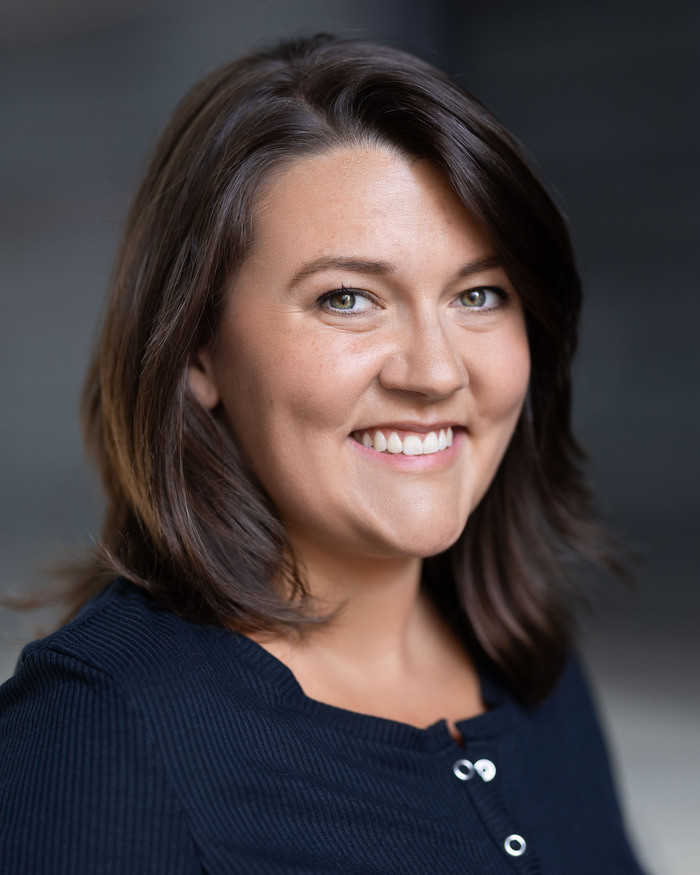
Megan Bontrager
Megan Bontrager is an author of SFF and horror currently based in Yorkshire. She received her MA from Johns Hopkins and BFA from the University of Central Florida. Her short fiction has previously been published with Quill & Crow Publishing House, Cypress Dome Literary Magazine, Frontier Poetry, Little Ghosts Books, Greykin Press, and 30 North Literary Magazine.
When she isn’t frantically scribbling down her next big idea, Megan enjoys playing TTRPGs and volunteering with animal rescues. She is responsible for two furry children, and hopes to support their lavish lifestyles with her books.
Megan is represented by Clara Chuiton at The Rights Factory
The Interview
1.- Could you introduce yourself to Jamreads’ readers?
Hi, readers! I’m Megan Bontrager, author of The Sea Hides Its Dead. I’m a Yorkshire-based Horror and SFF enthusiast, a Shakespeare scholar, and a TTRPG nerd. My indie debut, Eye of the Ouroboros, was released in 2024, and I have short fiction published with Greykin Press, Quill & Crow Publishing House, Little Ghosts Books, and more. I have a cat and a dog, and they’re both perfect and spoiled.
2.- When did you start writing fiction?
My first “fiction,” if you could call it that, was Final Fantasy fanfic. I was nine, and it was… bad. Final Fantasy fanfic, Kingdom Hearts fanfic, even Saddle Club fanfic. It was a disparate, weird time in my brain, but by golly I was putting pen to paper as best I could. But my grandfather, who was an English professor and an author who wrote about fifty manuscripts he never published, read all of it. He encouraged me to try writing my own stories, and was pleased as punch when I finally started writing fiction about a young girl named Maggie who kept finding magical ponies in the various corners of rural Georgia that my grandfather lived in. I like to think I’ve grown since then, but I do like the idea of coming back to the magical pony idea.
3.- How did the first idea for The Sea Hides Its Dead appear?
When I started The Sea Hides Its Dead, I had just moved to Dublin from the States. I didn’t know anyone, we were all confined to our houses (moving internationally during a lockdown is not fun, let me tell you), and I was struggling to finish a proposal for the PhD program that I would eventually start during my time in Ireland. I was living near the sea, and spent a lot of time walking my dog out to the beach to throw a ball around when being stuck inside became too stifling. Around then, I was also in the process of starting therapy for the first time, during which I ended up going no-contact with a parent. It was a fraught time for me emotionally, professionally, and academically and I had no one but my husband to lean on.
The Sea Hides Its Dead ultimately started with Caro, as she was, at the very core of her, an exercise in figuring myself out. I never expected this book to see the light of day; frankly, I hated it at first. I turned it in to my agent with a laundry list of apologies for how insufferable Caro was, how the cave was confusing, and how the anthropology of it all read more like an infodump than a book. I turned it in more out of obligation than anything, and also because I’d been talking about a “Dante’s Inferno x The Descent” book on social media long enough that I felt like I had to at least try. I’d put my disillusionment with my PhD, my complicated relationship with my mother, my endless proclivity for people-pleasing at my own expense, and my profound feelings of isolation into the most claustrophobic environment I could think of simply because it occurred to me that the only way out of feeling like this was by going through it. And narratively it made sense— lock the suffering protagonist in with the thing they’re trying to avoid so that they have to face it and go through it, physically and emotionally, rather than running away from it. In a way, I was doing that to myself, too.
Also, I make this joke a lot, but it bears repeating. I took the scariest things I could think of, the sea and men in academia, and put them together. Boom! Book. That’s also a valid answer, I think.
4.- Could you tell us about the inspirations behind the Leviathan and all the esoteric content of this novel?
I love cosmic horror. I also love the wackier, spookier mythos that comes from the Bible, like the actual Biblical Leviathan. TSHID’s Leviathan came to me the easiest of all, where everything in the book was concerned. In a book about identity, self-actualization, and existential dread, how fun would it be to have an ageless, unkillable cosmic beast who thinks it’s something that it’s not? That’s a big question in the book: is the monster an angel, or is it not? It certainly thinks it is, and it’s certainly doing its best to act like one, what with all the divine, irreversible judgement that it doles out to everyone who enters the cave. This case of muddled identity, I knew, needed to come from an informed place— but also a wildly disparate one. Enochian as a text, John Dee, and Elizabethan-era esoterica are all real, documented things, as are water-based religious systems, societies, cults, and cultural infrastructure. I studied Anthropology in undergrad (I seriously thought about changing my major from English, I was so whole-hog invested in this minor), so my own natural curiosity about the weirder side of anthropological discovery fed in easily to not only the characters’ fascination with it, but the way it took shape in the “magic systems” of the Leviathan’s cloister itself.
What the Leviathan really is becomes a central question to the book, and it’s something I actually do have an answer for. Is it an angel? Is it a cosmic, eldritch terror? Is it an ancient sea creature that’s been alone so long that it’s driven itself mad in an attempt to make sense of its purpose? Who knows! (I know.) But the question was always going to be a central tentpole of what this story is, and a point to make on purpose. What are we on our own? What are we if we allow other people to make us? What can we convince ourselves of? And what’s the fine line between the divine and madness?
Also, the anthropological research I did into sea-based societies and systems was just really freaking fun. It all seems so mystical and unknowable now, but it’s crazy how that all has informed the infrastructure of the world today! Anthropology is cool!
5.- Let’s talk about characters, starting with somebody that deserves all the bad that happens to him: Edward Beck. How did you manage to write such a well crafted character while managing to transmit such a visceral emotion?
Oh yeah, Beck is the worst. And I’m very flattered that people consistently tell me that he is, in fact, the worst man ever. Every time I get a DM from a reader about how they hope something gruesome happens to him, an angel gets its wings. And I needed him to be that terrible! He needed to be almost cartoonishly evil to show how truly ridiculous it is that we do this to ourselves so often, how we attach ourselves to the worst people and situations in search of validation and community. Beck is an amalgam of every horrible man I’ve ever know, every narcissist I’ve ever known, and every combination of both. Beck needed to be a direct reflection of the narcissism that Caro experienced with her mother, but somehow it feels much, much ickier when it’s a man saying all of that to one of his students. I needed Beck to be slimy, but charismatic. Desperate, but proud. A leader, but a conniving one. We meet him in the thick of his emotional hold over Caro, and he has to be insufferably bad so that readers look at Caro and want to bop her over the head.
I do think that Beck wouldn’t have worked so well if Caro wasn’t so, well, pathetic. Beck is someone who knows exactly who he is and what he’s doing, and he’s all the worse for it. He’s a narcissist, plain and simple. A lot of his dialogue is basically Narcissism 101. I’ve heard it all before, and anyone who’s struggled with this will see it from the jump. He needed to also be a mirror of Caro’s mother, because a big part of Beck as a character is that he is the perpetuation of a cycle that began, for Caro, long before him.
Like all my favorite villains, he doesn’t think that he’s the bad guy. He thinks that he’s totally justified in all he’s done in the name of academic and personal glory. And anyone who’s spent thirty seconds in a graduate building on any college campus can attest to the fact that there are plenty of Becks out there who would do the very same in a heartbeat. But again, he wouldn’t work without someone to offset his awfulness.
6.- Caro is certainly a complicated character; how did you balance all the faces that could be contained in her?
I think that at some point in all our lives, we either know a Caro or we are a Caro. While I have absolutely been the blind, people-pleasing, wet noodle who would do any mental gymnastics necessary to justify a man, I’ve also been on the other side of it, watching folks just like me get bogged down in these horrible, ridiculous relationships. Some context: I once dated a guy who, for example, left me on the side of the highway on Valentine’s Day because we were arguing about the fact that he showed up to a nice dinner in sweatpants. But no matter how mad I was at him, I still bent over backwards to defend him to my friends when they, too, wanted to rip him open from the bottom up. My friends and I grew distant, and some of them simply stopped talking to me because I was in so deep trying to justify this bottom-of-the-barrel troglodyte of a man, who was also abusive, and manipulative, and bleeding me dry financially. But man, I wanted so badly to be loved that I dealt with it! I defended him! I stuck with him for years because who the hell was I without someone to tell me that I was worthy of being loved despite how easy it was for him to turn around and show me otherwise? The friends that stuck around tried their best to hammer it into my head that I needed to get out of this vicious cycle, that I was better than all of it, but it took me years to hear them. But then, years later, I was on the other side of the fence. I was watching a new friend in a new city do the exact same thing. It was only then that I realized what a vicious cycle it really is. I grew up with a narcissist, so of course I was going to fall into the familiar pattern of a narcissist’s uncomfortable, conditional, volatile “love.” And of course I felt stupid as hell when I saw it happening to someone else from the outside.
Being on both sides of this issue showed me that you can be stronger than that cycle. Be it one perpetrated by a narcissistic parent, a partner, a friend— what have you. It’s easy to chase the ephemeral high of their validation, and seeing the light is hard. But when you’re on the other side… sheesh.
I always knew that Caro was going to be a divisive character. Ultimately, she needs to be. She needs to be a vehicle for that visceral frustration, that taking-them-by-the-shoulders-and-shaking anger that we all want to do when we see our friends making piss-poor decisions. We’re on the outside looking in, watching this person who’s stuck under the thrall of a narcissist work her way out of it. It’s supposed to be frustrating, and so is she. But anyone who’s been on the inside of it, will know how good it feels to make it there, out from under the influence of someone who would do anything to turn you into an accessory for their own aims. Caro needed to encapsulate both halves of that lived experience: the being in, and the getting out. She does a lot of mental backflipping to try and justify Beck, and it’s maddening. She’s better than this, and he sucks! She’s dumb, and she’s weak, but how satisfying is it in our real lives when we give ourselves the grace to be stronger? Better? The potential was always there for her. We see it in the opening chapter, because we open the story out of Beck’s physical proximity. But then she gets into his orbit, and she becomes someone else entirely, someone molded by expectation and people-pleasing tendencies. I knew that the heart of her character had to be this: getting out of that void sucks, but man is it worth it when you get to the top.
So yes — everyone will be a Caro or know a Caro at some point in their lives. Mad props to the friends who shake their Caros out of their funks.
7.- Why did you choose the particular setting you used for TSHID?
I am a super claustrophobic person, so already when it came to making this a tried and true horror book, I thought ok— what would be the worst possible place for me to be right now? And we’ve all seen those caving videos where the guys with Walmart head lamps get stuck in narrow, flooding passages. Why do they do that? Like, seriously?
The setting had to help facilitate the idea of “the only way out is through,” which was the emotional driving force of the narrative. I’d recently read a great book by Em X. Liu called The Death I Gave Him, which is a locked-room sci-fi mystery inspired by Hamlet. It was so good, and it really opened my eyes to the idea of what characters have to go through, whether they want to or not, when they’re well and truly stuck. There’s no running away from conflict, internal or external. You’re just there with monsters, and natural threats, and endless emotional baggage. Take the forced therapy that the characters are forced to endure, put them in an oppressive, no-escape physical setting, and see what happens. It’s like locking a household full of Sims in a one-room building just to see what catches fire first.
8.- What does Megan Bontrager like to do in her free time?
I’m a TTRPG nerd! Right now I’m both a player and a Dungeon Master in a number of D&D campaigns, and I’ve also recently gotten really into Vampire: The Masquerade and Delta Green. When I’m not rolling dice and putting my characters into increasingly doomed scenarios, I am a lifelong horse girl. I injured my back a while ago, so I can’t ride as easily as I used to in my younger years (old man shaking fist at cloud meme here), but I don’t even need to do that. My happiest days were spent working five in the morning to seven at night at a farm with forty plus horses. I love to do the barn chores that nobody else wants to do, as long as I get to hang out with a horse. Bonus points if it’s a rescue. I would do anything for an animal rescue!
9.- You are quite a prolific in ideas writer. How do you do it?
I joke a lot that there’s something unmedicated and overcaffeinated happening in my noggin, but it’s starting to feel like only half a joke! I’m very lucky in that I’m always consuming some form of storytelling. I play a lot of video games, read a lot of books, watch a lot of movies that I force my husband to watch with me. Not to mention the TTRPGs; I’m so invested in one of my current campaigns that I wrote a whole book about my character and his love interest. It’s a privilege to have inspiration come from so many different directions, be it from my endlessly creative peers or from the media I’m engaging with. I’m also very privileged in that I have a husband who enables me to do this to my heart’s content. He works very hard to allow me the time to sit and stew over my 45-page pitch document like a mad scientist in a lab, and I really think that I owe much of my freedom in doing this to him.
But also to the caffeine. I really love coffee.
10.- What can we expect from Megan Bontrager in the future?
My next book is out with Orbit in 2027! It’s called Where Dead Things Grow, and it’s a swampy horrormance about the Fountain of Youth, necrotic magic, found family, and Death himself. After that, I have another book out with Orbit in 2028 that I don’t really think I’m allowed to talk about too much… but think lesbian vampire nuns in an alchemical lab. That’s all I’ll say for now.
I have a whole host of other things cooking in the background at the moment, particularly given that the summer break is coming to a close shortly, so hopefully I’ll have more to say about this soon!
But in the meantime, thank you so much for inviting me here to gab!