Writing android characters in the age of AI
I imagine if you are a sci-fi fan of a certain age who has a fascination with androids, robots, and/or artificial life, yours began much the same way mine did: by watching Star Trek: The Next Generation as a child.
And, like me, it’s entirely possible that your fascination with those kinds of science fiction characters has soured somewhat since 2022.
I was first introduced to TNG in the summer of 2001, several years after it had gone off the air, and immediately developed a deep, profound love for the Star Trek universe—a love that persists to this day. Most importantly, I was (and continue to be) a fan of Lieutenant Commander Data, the first android character introduced in Star Trek. The concept of artificial life, and how humanity learns to live with it in science fiction, fascinated me. I soon found myself drawn to other science fiction media that contained sentient robot characters, such as I, Robot (both the short stories and the movie), Get Smart, and even The Jetsons.
I was interested in the questions and dilemmas that artificial life proposed, which science fiction has tackled in many different ways over the years. What does it mean to be human? What counts as sentient life? What does it look like to have humanity and sentient artificial life interact and even co-exist? If androids were real, would they actually wish to be human instead, as some do in Star Trek?
Those were all themes that I wanted to tackle when I first started writing The Chamos Project in 2013, though I wanted to explore them through a queer lens I felt was lacking at the time. For a long time, I was pitching this book as “Star Trek but gay”, and though it is set in a queer-normative world, the main relationship is still one that most characters don’t accept. The ship’s human doctor and android engineer fall in love over the course of the book, something that is considered taboo among humans, while android society has gone so far as to outlaw such relationships.
I wanted to turn a couple of sci-fi tropes on their heads in this book. I didn’t want any of the androids to aspire to be human. I also didn’t want all humans to be prejudiced against androids, and I didn’t want the androids to be a monolithic culture. In the book’s fictional world, discrimination against androids comes not only from some of the humans, but from other androids as well. They have their own hierarchies, customs, and yes, even prejudices of their own. It was a fun exercise to develop a diverse android society for this book.
However, writing books where androids fight to be recognized as sentient beings with the same rights that humans have has certainly lost its luster since 2022. The moment ChatGPT came onto the scene, my interest in writing about androids and robots dropped significantly. I was genuinely taken aback at how quickly I went from enjoying the exploration of artificial life in my stories to actively despising it and being unable to write it at all.
AI (which I must stress is not actually an intelligence, no matter how many people think ChatGPT is actually holding a real conversation with them) has taken a wrecking ball to people’s lives in the past four years. It is responsible for massive layoffs, an incredible amount of environmental damage, and slop images/writing appearing everywhere you look. AI is being forced into every aspect of our lives, from browsers to appliances to customer service, and it’s impossible to escape.
It’s been difficult for me to divorce these real-world happenings from my writing, and in fact, I don’t think I could or should. Science fiction is supposed to act as a mirror, to reflect society and to critique it. Science fiction explores the human condition, and it speculates what impact certain technologies or policies can have on humanity. More than that, all writing is political, and I can’t shut out the real world when I’m drafting my books. I’m grateful I wrote TCP when I did, because I don’t believe it’s a book I could have written today.
I wish I could say that I will continue to write about flawed queer androids, but with the way things are going with AI, I’m not certain that I can. Too many people have had their lives and livelihoods devastated by AI, myself included. However, I’ve had a lot of fun exploring the end result of technology in other ways, such as writing short stories where memories can be modified for a price, or where technology is used to force workers to produce labor 24/7. My upcoming books will also explore first contact between humanity and an alien species, and how diplomacy might work in a galaxy that is teeming with life.
I hope to someday return to writing about androids and robots, and perhaps even continuing the TCP universe. For now, I’ll shift my attention to something a little less likely to happen in the near future—humanity meeting another alien species—and dabbling in the fantasy genre. I think that when something that once belonged to the pages of a science fiction book becomes too real, even when it’s a poor imitation of that fictional technology, it’s fine to take a step back or focus on something else.
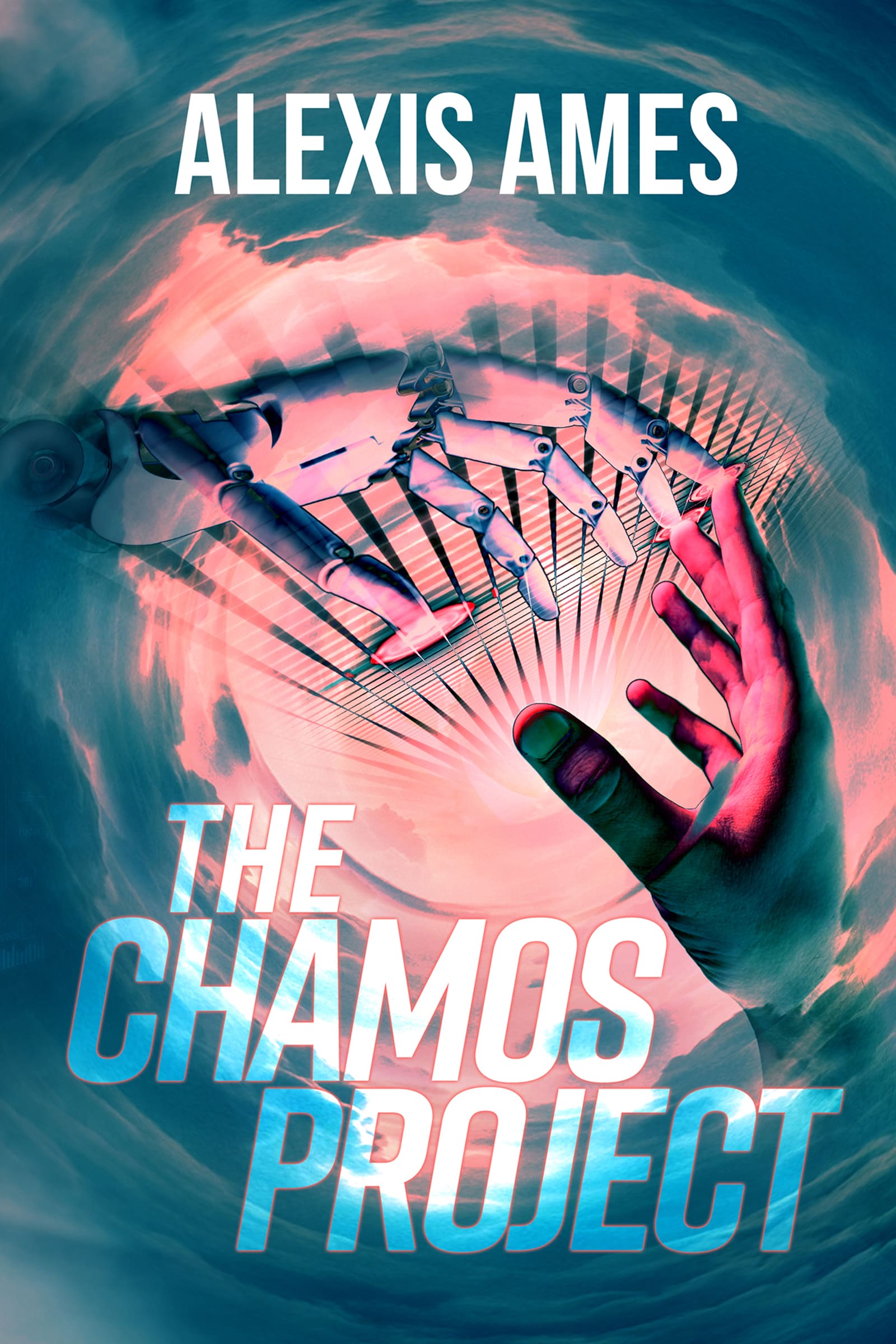 The Chamos Project cover
Twenty years after an attack perpetrated by androids takes the lives of those closest to him, Doctor Leander Dade is living a reclusive life on Earth—until the Alliance Fleet recalls him back into service aboard the first extrasolar colonization vessel, Ariadne. Unable to refuse this order, Leander returns to space and finds himself serving alongside androids, whom he has never forgiven for the attack.
Tensions are high from the start, but when a mysterious accident strands Ariadne years away from aid, the ship’s crew and colonists—humans and androids alike—must band together for survival. Leander is forced to work with the very enemy who nearly cost him his life, and he soon finds himself falling for the last person he expected: Mac, the ship’s android chief engineer.
After a mutiny splits the ship in two, Mac comes to the realization that he alone can save the ship and everyone on it, and Leander faces an impossible choice: intervene, or allow Mac to risk his life and their love for each other.
You can get a copy on this link.